

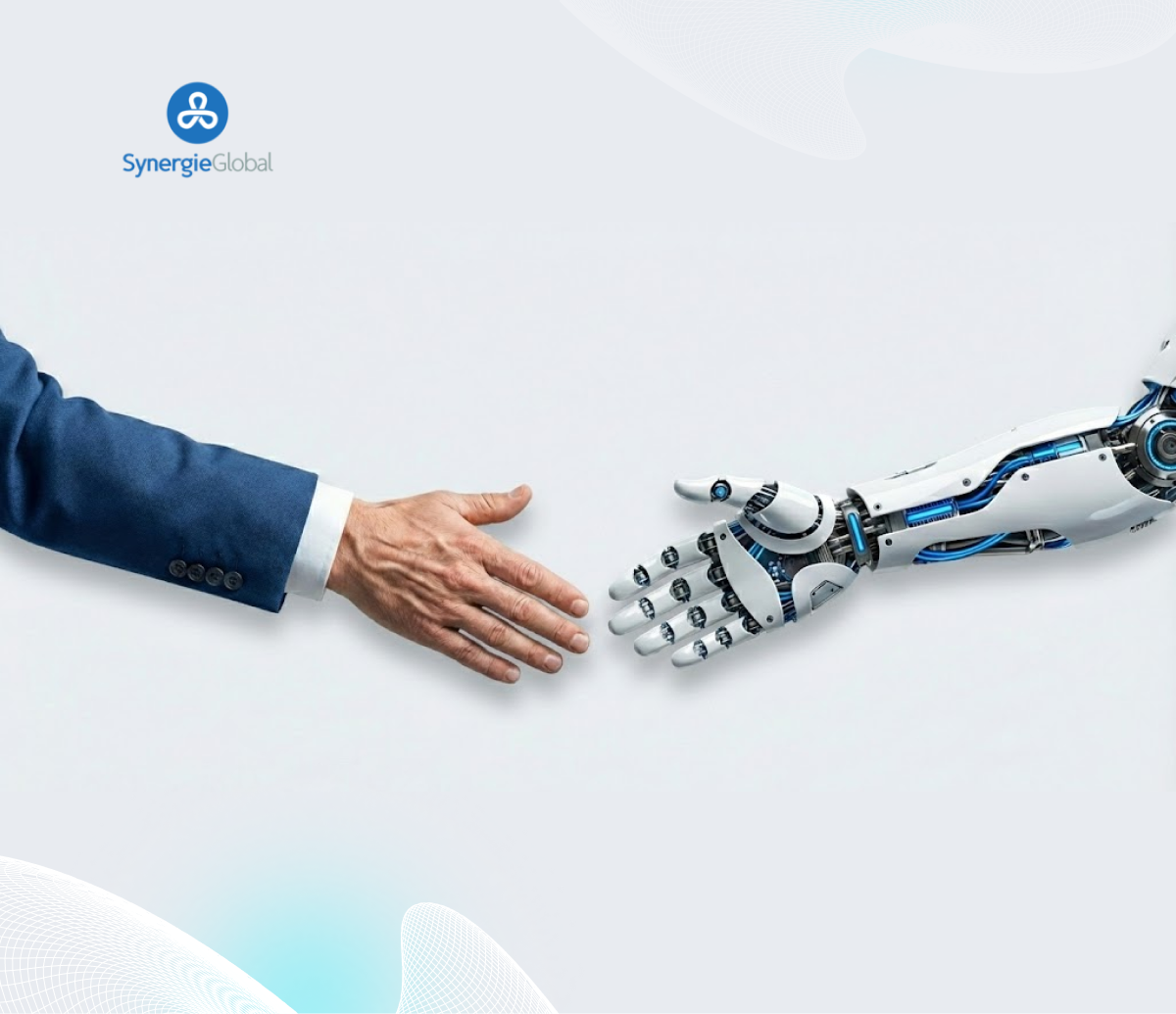
For years, we have treated AI as a “sidekick” – a helpful assistant that sits on the sidelines waiting for a prompt. But according to recent insights from Harvard Business Review, we are moving into the era of the digital teammate.
From software licenses to autonomous capacity
The winning strategy for 2026 isn’t about how many AI seats you can buy; it’s about how much autonomous capacity you can integrate. When you treat an agent like a software license, you manage it like a tool. When you treat it like a teammate, you manage it by outcomes.
This requires a shift in mindset for leadership. You aren’t just deploying code; you are architecting a hybrid workforce where agents own objectives, not just tasks.
The bottleneck of the “sidekick” model
Most organizations are currently stuck in a management bottleneck. If an AI requires a human to initiate, verify, and correct every single action, you haven’t gained capacity – you’ve just changed the nature of the work. To achieve true scale, agents must be integrated into an operational playbook that allows them to:
- Map work to outcomes: Deconstructing roles into specific tasks that AI can own.
- Define escalation points: Clarifying exactly when a digital teammate should hand a task back to a human expert.
- Execute autonomously: Moving beyond “searching” to navigating internal systems to resolve bottlenecks.
The SynergieGlobal perspective: Workforce orchestration
As strategic advisors, we help organizations move beyond the distraction of “tool selection”. We bridge the gap between executive vision and the operational reality of hybrid teams. Our approach to workforce orchestration focuses on:
- Talent acquisition for AI: Treating the integration of agents as a new category of talent management.
- Outcome-based roadmaps: Shifting from tracking “prompts” to tracking “business results”.
- Lean integration: Building the infrastructure required for an agentic workforce – built without the bloat.
The goal isn’t to replace your team with “smarter searching”. It is to expand your team’s potential through operational autonomy.
Are you buying more software, or are you ready to onboard your first digital teammates?