

For the past two years, one question has dominated conversations about enterprise AI:
Which jobs will AI replace?
It’s an understandable concern, but it may be the wrong question.
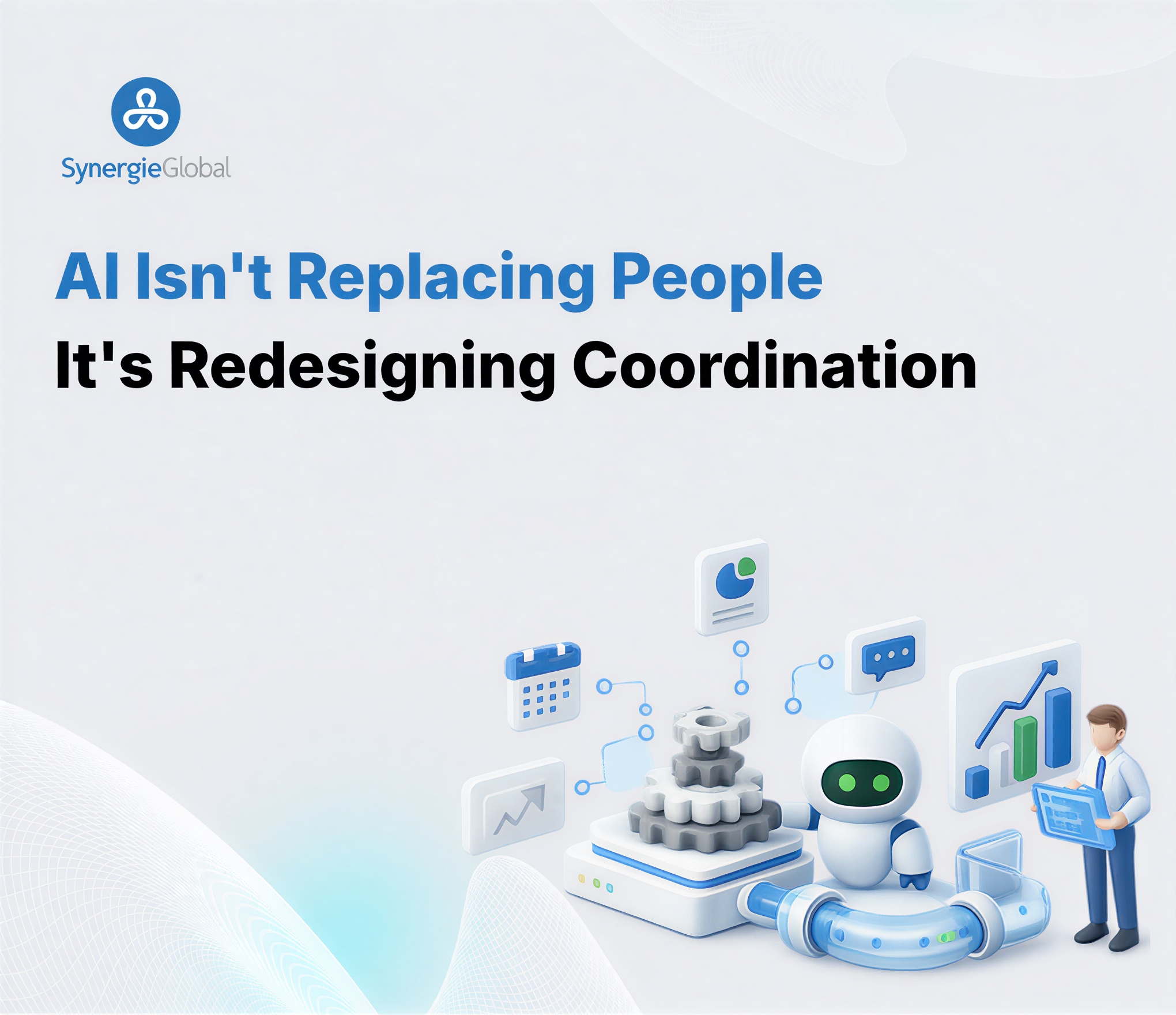
The most significant impact of AI isn’t replacing developers, analysts, or managers. It’s automating the coordination work that keeps organizations moving every day.
Think about how much time is spent assigning tasks, routing requests, collecting approvals, tracking progress, following up on dependencies, or coordinating work across teams. These activities rarely appear in job descriptions, yet they consume a significant portion of enterprise operations.
Historically, people have filled these coordination gaps because someone had to. Today, AI agents are increasingly capable of handling many of these responsibilities by maintaining context, monitoring workflows, triggering actions, and keeping work moving across systems.
This represents a fundamental shift in how organizations operate.
The conversation is no longer about automating individual tasks. It’s about reducing the friction that slows work down as it moves across the enterprise.
That distinction matters because coordination is often where organizations lose the most time. Delayed approvals, fragmented communication, manual handoffs, and constant status updates create operational drag that limits execution far more than any single task.
As AI begins to absorb more of this coordination work, management itself starts to evolve.
Rather than spending time chasing updates, assigning work, or resolving routine bottlenecks, leaders can focus on higher-value responsibilities: designing workflows, improving decision-making, governing AI-enabled processes, developing people, and managing the exceptions that still require human judgment.
This doesn’t diminish the importance of managers, it changes where they create value.
The organizations that benefit most from agentic AI won’t simply deploy more intelligent systems. They’ll redesign how work flows across the business, treating coordination as a capability that can be continuously improved rather than a manual process hidden inside meetings, emails, and spreadsheets.
In many ways, this is the next stage of enterprise AI transformation.
The real opportunity isn’t replacing people.
It’s reducing the operational friction that has quietly constrained organizations for years.
As enterprises continue adopting AI, the competitive advantage may not belong to those with the most advanced models. It will belong to those that redesign their operating models so people spend less time coordinating work, and more time creating value.