

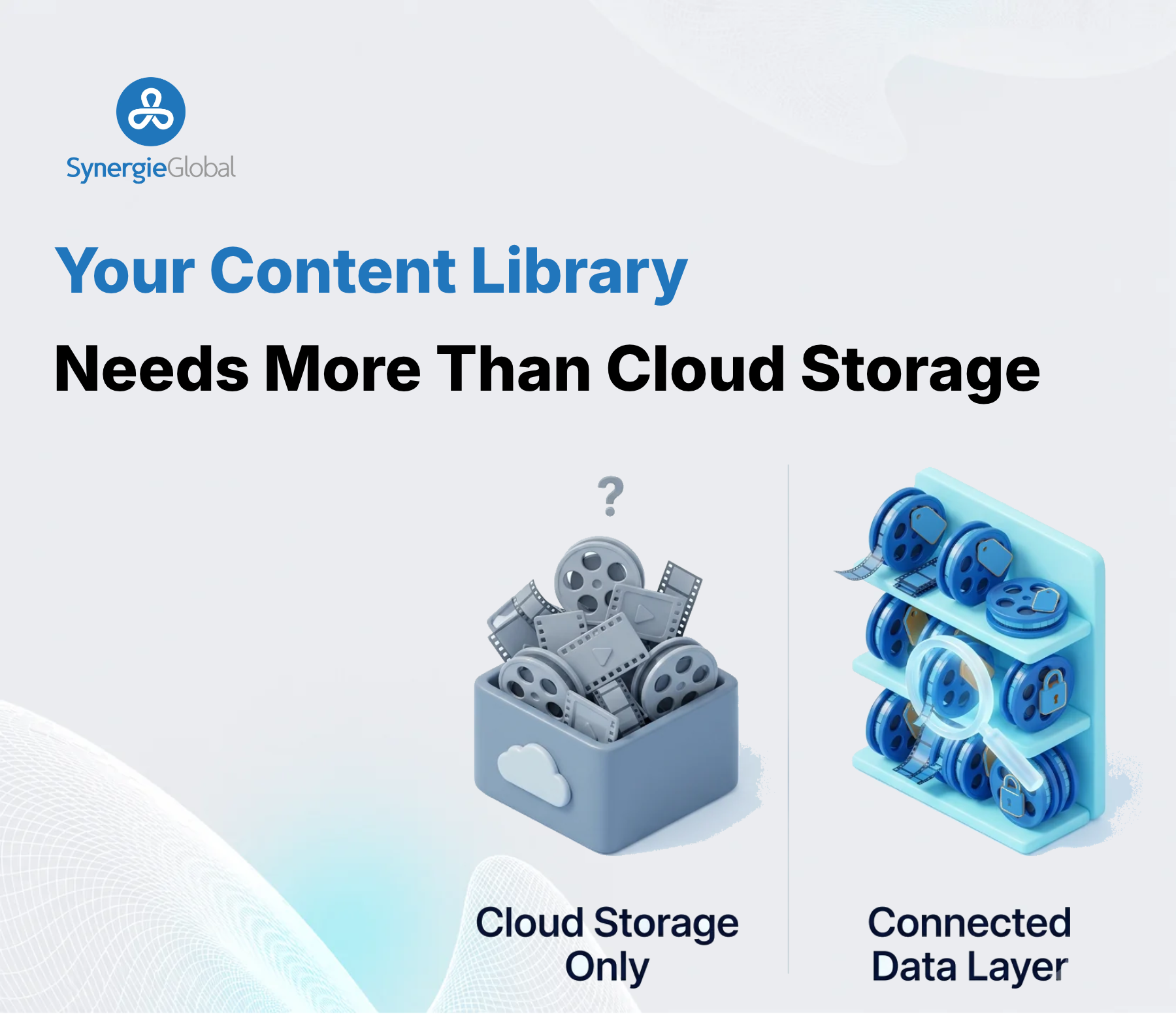
Media companies have spent years building vast digital content libraries. Yet having millions of videos, images, and production assets stored in the cloud does not mean they can use them effectively. The challenge is no longer just storing content. It is making the information surrounding that content connected, accessible, and useful.
Cloud Storage Doesn’t Create Content Intelligence
Cloud storage makes digital assets easier to access, but access alone does not create understanding. A video file, for example, becomes more valuable when an organization can identify its scenes, subjects, production history, ownership, and permitted uses. Without this context, teams may struggle to find the right assets, verify their availability, or reuse them across different workflows.
AI Needs More Than Access to Content
AI can support content discovery, recommendations, and workflow automation, but its effectiveness depends on the information it can access. Inconsistent metadata, fragmented licensing records, and disconnected operational systems make it harder for AI tools to produce reliable results. Giving an AI system access to a large content library does not automatically give it the context needed to interpret or use those assets correctly.
Building a Connected Content Data Foundation
The priority is to connect the information that gives content its business context. This requires consistent metadata, accessible ownership and licensing records, and integration between content repositories and existing enterprise systems. Data governance, quality controls, and access permissions are equally important. Rather than replacing every platform, organizations can focus on making existing systems work together through a more coherent data architecture.
From Content Archives to Business Value
A connected foundation can make content easier to discover, reuse, and distribute. Teams can spend less time searching across disconnected repositories and more time identifying relevant assets. Reliable rights information can also support better-informed decisions about where and how content may be used. These improvements create a stronger basis for AI-powered recommendations, localization, and monetization opportunities.
The Next Advantage Is Content Intelligence
The next competitive advantage will not come from storing more content or deploying more AI tools. It will come from connecting the data that makes existing content understandable, governable, and commercially useful. For media companies, that is what turns a digital archive into a foundation for intelligent operations.